Wednesday, January 14, 2015

Things no one told me about being a chef, part one

There are a bunch of things that I've discovered about being a chef that no one told me about being a chef before I actually became a chef. Here's one of them:

You are basically making it up as you go.


When I first started conceptualizing the menu for the wine bar, a month or so before we opened, I struggled a lot with not second-guessing myself (something of which I'm still guilty). At the time, I remember telling a friend who owns a 3-year-old restaurant that I felt like I was just making it up as I went, and his response was, "I still feel like that, every single day." I didn't really believe him at the time, watching his cool demeanor as he prepped, cooked and managed his restaurant seemingly seamlessly.

Fish en papillote. A moderately successful dish

I'm now almost two years into my first official chef job, and not a day goes by where a small part of me doesn't feel like I'm just making it all up as I go, or that I don't feel like I'm making decisions based on gut instinct or intuition. Some of this revolves around menu writing: There's really no telling how something's going to sell at any given moment, and I don't really have a test audience. As a new chef, I'm trying a lot of recipes for the first time, and relying on my skill and intuition to guide me in the right direction. I'm constantly balancing What I Feel Like Cooking with What I Think Will Sell with What Goes Well With X Wine with What's In Season Right Now with What Can I Purchase In Small Amounts Without Breaking My Food Cost with What's Creative And Not Super Derivative with What's Classic And Not Trying Too Hard with... with... with...


(Not to mention What Will Pick Up Beautifully On An Induction Burner And/Or Quarter-Sized Sheet Tray With As Few Steps As Possible... but that's a story for another time)


Cured salmon and smoked oyster board. I really liked this one


On top of that, there are an endless number of managerial decisions that I make on any given day, the answers to which often boil down to: What's the smartest decision here? Sometimes the answer is black and white, but often there's a undefined gray area and you just do the best you can with the information you're given. Some may call this "experience" or "creativity," and I guess if you're smart you can deduce that my past experience has certainly informed the decisions that I make now. But honestly a lot of it is just what feels right, and honestly that seems really crazy to me.


This isn't to say that I make decisions lightly or fly by the seat of my pants; quite the opposite. I'm simply surprised at how much I do on a daily basis that is a result of me deciding on something because it feels like the right thing to do or it seems cool or fun. Maybe this stems from the fact that I've never been much of a rule-breaker, and always did well with boundaries, when a lot of chefs seem to come from an opposite perspective. I'm having to learn to trust myself, and I am lucky enough to have some great sounding boards as co-workers, but ultimately I am the one Making Shit Happen and it's a lot harder than they tell you. I've gotten used to it over time but it's still pretty weird.


I will say, however, that once I realized I was feeling this way, I started asking a lot of well-seasoned, well-respected chefs, "Do you ever feel like you're just making it up as you go?" I have yet to have someone tell me "No," and the most frequent answer is "All the time!" At the very least it's nice to know I'm not alone.


Sunday, January 12, 2014

Honest advice to a budding cook/ chef with no experience whatsoever

This is a slightly altered version of a real email that I wrote to a young man who found my blog and is considering culinary school, but had no real experience cooking. He wrote me that he was intrigued by cooking, and I thought it pertinent to share this advice with a wider audience. I get the "should I go to culinary school?" question all the time, and I think it really depends on your situation, but the following is the advice I give to anyone who is considering culinary school without some background in restaurants.

Hey ****!

I can definitely relate, as it took me about 5 years of waffling back and forth before I finally decided to go to culinary school. I checked out FCI, ICE, CIA Hyde, J&W in various locations, AI in various locations, CCA, CSCA, and Western Culinary before deciding on OCI. Let me go ahead and squash your concerns about not being good enough for culinary school, because I didn't know shit about cooking besides what I had learned as a hobbyist cook and food geek, and most of the people around me at school knew even less. Now that I'm on the other side of it and have been cooking professionally for about 6 years, I feel that if I had to do it all over again, I would still go to culinary school, but I'm glad I had some restaurant experience before I went, and that's my advice to you if you want to know whether or not your cut out for this industry: GET SOME RESTAURANT EXPERIENCE.

Books/magazines/websites can supplement your education, but real learning comes from doing, and doing things over and over and over and over again until it's muscle memory and/or intuition. You will do this at culinary school to an extent, but I think it's best to know before you make that career move and investment. Is there a place in your town you can go in and do prep when you're not in school? Even a little family-run diner that does things from scratch will be able to show you the inner workings of a restaurant. If you're lucky and there's a nice-ish restaurant nearby, see if you can get a weekly stage (stage= French word for unpaid trial period). A lot of cooks and chefs do stages in other restaurants to expand their horizons. If you can go into a restaurant, offer your services one or two days a week for free (Saturday mornings/afternoons are great, as most restaurants need extra hands for prepping Saturday night service), and just be their yes man for a few weeks/months, you will learn A LOT. Even if it's just for one night. Most of all, you will see what it's like in real life, and whether or not you're really cut out for this line of work/life. And also whether or not you want to invest in culinary school.

Cooking in a professional kitchen is nothing at all like cooking for your family or what you see in cooking shows; For the first few years of pro cooking especially, it's a lot of hard work for little pay, not seeing your non-restaurant friends or family, not getting "normal" days off, and simply following orders ("Yes Chef!"). You're cooking other people's recipes and menus, and you're doing it their way, and your doing the same thing over and over, night after night. You're paying your dues and building your foundation. You're not exercising your creativity, and you're not writing menus and coming up with dishes. You're lucky to have an idea of yours show up on a menu in your first three to five years of cooking--I still remember the day I got an oyster mignonette on the menu, almost a year into my first job. I felt like I climbed a mountain. I didn't get anything else on a menu for another 2 years, when my chef was stuck in NY during a snowstorm and the sous asked me to come up with a pasta special for just that night. One menu item and one sauce in my first three years, out of hundreds of menu items I cooked. You're burning/cutting/breaking yourself in new and weird ways, and you're eating irregularly at best. You burn shit and your chef gets pissed and you feel worse than you ever have, until you fuck up that other thing and your sous almost beats your ass. You're really tired and you eat Hot Pockets for dinner after service at 1AM because you don't have the energy to cook for yourself after cooking all day.

BUT! If you have the "it", the X-factor, the thing that lives in us crazy cooks and chefs that forces you night after night to work your ass off and do better than you did before and want to be better for your Chef and want to be better for all your coworkers, you will thrive in this environment. You will soak it up like a sponge, and question every technique and every step, even as you're doing things the way you've been taught. You want to know the "why" of it all, and you'll start to figure out the "why" that makes the most sense to you. You're okay knowing that your cooking job will not make you wealthy, unless you luck into a high-paying corporate gig that somehow doesn't suck your soul.


All this said, I really loved and cherished my time at OCI, and I would definitely do it all over again if I had the chance. So much of your success in culinary school is dependent on the work you put into it-- you get out of it what you put into it, really and truly. I showed up early and stayed late every day; I turned in every assignment on time; I did all the extra credit and volunteered for all the off-site events; I asked every single instructor every stupid question I could think of. It's a really safe and fun place to learn, and of all the culinary schools out there, OCI does the best job of putting the "real world" of cooking into perspective--you're doing tons of knife work and kitchen techniques daily. But there's also a ton of culinary math and exams and book knowledge that you must know to pass, and I swear it's vital further down the line. As a chef currently I'm constantly swimming in spreadsheets and numbers, and my Harold McGee is never too far away.

Speaking of which, I know you asked for some book/reading recommendations, to which I will recommend:

- On Food and Cooking, Harold McGee. This is the driest reading of all time but it's a great reference when you want to know why meat turns brown and crispy, and what the difference is exactly between a poach and a sear.

- Any cookbook by James Peterson. He does a great job with explaining history of food, and his basics are always solid.

- Joe Beef cookbook. One of my favorites in the last year, reads like a novel in some ways.

- Julia and Jacques Cooking At Home. This was the first cookbook I ever read that really imprinted in me the idea that there's more than one way to do things "right" when it comes to cooking.

God there are so many other cookbooks I could recommend... The French Laundry, River Cottage, Zuni Cafe, Baking Illustrated, Fat Duck, even Joy of Cooking. Get thee to a bookstore and sit your ass in the cookbooks section for a good long while.

- http://linecook415.blogspot.com/ The blog of Richie Nakano, current chef of Hapa Ramen in SF. Specifically his blog entries from 2007-2009, while he was sous chef at NoPa. They're gut-wrenchingly accurate tales from line cooking, and really rung true to me in my first few years of cooking.

- http://eggbeater.typepad.com/ . The blog of Shuna Lydon, NYC pastry chef. She has some really good advice to starting cooks or people looking to dabble in professional cooking. Good place to start is here: http://eggbeater.typepad.com/shuna/so-you-want-to-be-a-chef-.html

- Ideas in Food: http://blog.ideasinfood.com/ . I'll be honest, I don't read this frequently but a lot of cooks I know do and have found it insightful.

- The Food Lab at Serious Eats: http://www.seriouseats.com/the-food-lab/?ref=nav_main

- Lucky Peach Magazine. The only paper magazine I subscribe to.

So that's probably either way too much information or not at all the answer you were hoping for, but I hope I was able to help in some small way. Good luck with whatever you decide, and there's a great farmer's market at the PSU park blocks every Saturday from March-December :). Let me know if you have other questions.

Cheers,
Ingrid

Sunday, June 23, 2013

It's a whole thing, you guys. It's a whole thing.

It's 3AM, I'm on the ass-end of four 15-hour days in a row, and I can't say in all honesty I ever imagined I would be where I am today.

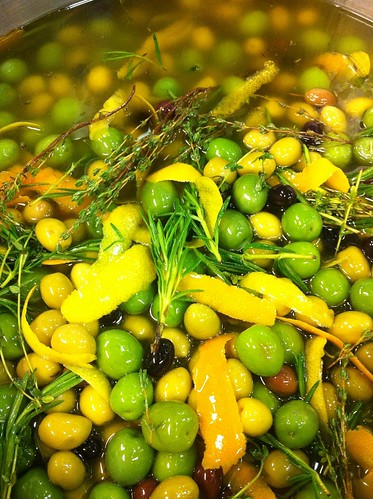
Marinated olives in some yummy shit
Last night was the opening night of the little awesome wine bar that my boss conceived of mere months ago with the help of our wine shop manager. My official title there is chef, which I still can't say without blushing. Feels weird, man. I mean fuck, this is the hardest I've ever worked at something and still feel like I have such a long way to go before I'll have accomplished anything meaningful. This is not to say I think I'm doing a bad job; quite the contrary, I've put my heart and soul and literal blood, sweat and tears into creating this menu. I can genuinely say I've never worked harder at anything in my life, and I think it's pretty good for a first go.

It's just that when I think of the term "Chef", I think of my culinary 101 instructor Bikram, a joyful Nepalese beast whose curry I have yet to meet an equal, and whose sharp tongue and kind heart from his many years of being an executive chef at an international resort hotel helped prepare me for the real fire and heat of a professional kitchen. I think of my first mentor Jack, who was gracious enough to take my green ass under his wing. He commanded kitchens, held down a line better than anyone, cooked every station better than everyone and made the most gorgeous, inspiring food that only a person with 20 years of professional cooking experience could make. He blew minds here in Portland, and led the golden age of a restaurant whose employees I'm all still friends with, impossibly, and one of whom I'm marrying in a few weeks*.

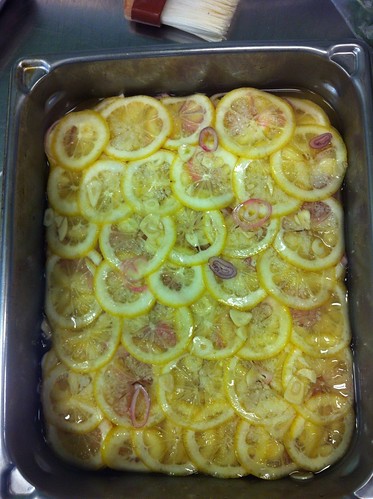
Preserved lemons. Jack's recipe.
I think of Sarah, the chef at the restaurant I recently left to open the wine bar, who is one of the most driven chefs I've met and whose only passion is food. She deserves all the accolades she's received and more but doesn't have the reach of a "Portland celebrity chef" because she's not much of a Food-Network-ready glad-hander and instead prefers to spend her time on the line, in her restaurant, actually cooking and creating some of the best food I've ever had. I think of a million and one other talented and driven chefs who I've had the opportunity to meet, talk to, work under, or simply admire from afar, and they've all touched the lives of food nerds like myself in a way that means something, to me at least. I look at their plating photos and their impeccably clean kitchens and think, shit, that is fucking brilliant. And shit, I'm a fucking mess. I am not their equal. I am not their peer.

I want to get there, but it still feels like a long way off. Am I not giving myself enough credit? Am I too hard on myself? I don't know, maybe. In the meantime I'm spending a lot of my days playing phone tag with various vendors and purveyors, some of whom won't give me the time of day because I'm a no-name nobody. Hey weird purveyors, I'm literally trying to give you money for your product and you're making it really hard for me. It shouldn't be this difficult to give you cash for this thing you're selling.
classic love/hate relationship

Also, I really like the menu I've put together, but it's a menu that has a fair amount of restraint because the timing of the wine bar's opening ended up strangely coinciding with another giant, life-changing event: *In two weeks, I'll be marrying my best friend and the best partner a person could ask for in a reasonably intimate ceremony in one of my favorite parks in Portland. Basically I'm spending the next week and a half working out kinks in this menu, putting systems into place to make sure that everything operates smoothly while I'm gone, prepping the shit out of backups for my homies to use in my absence, just making sure none of the wheels will fall off. And then Jeff and my entire families converge in Portland for a week of celebrations followed by a week of honeymooning (which, let me just take a minute to point out that our boss was so incredibly generous to give us a full week for a honeymoon, which is pretty much unheard of in this industry).

Let me also just say that if anyone ever asks you to open a wine bar and plan a wedding to occur within two weeks of each other, just say no. I truly love everything I'm doing right now, but I do not recommend this schedule to anyone. While the timing isn't ideal, it was a team effort on all parties to not let either big amazing thing stop the other big amazing thing. I come back to the restraint on my menu because I want to do a lot more with the menu but I also wanted to make sure it's foolproof while I'm gone, which is already a challenge with any menu but an especially interesting challenge with an opening menu. I'm hoping to stretch my wings a little (a lot) when I return.

Really, I just want to cook from a genuine place for a public audience. And I have this truly unbelievable opportunity to do just that. Like how many motherfucking cooks can actually say that??? Not many, my friends, not many at all. I constantly find myself flabbergasted at my fortune. I just want to do this right, and I want to do this well.

Wednesday, February 13, 2013

Staging Like A Pro

I've been itching to write lately, and I found the following post in my drafts folder while sifting around in my blog archives. I'm warming up to write about what's been going on in my present life (Kitchen managing! Events cheffing! Wedding planning!), but I figured this would be a nice and easy return to blogging. I must have written this in 2009 while I was still in my first kitchen, and I'm pleasantly surprised that I feel pretty much the same way about staging now as I did then. I've left the post as I wrote it 4 years ago pretty much intact, with any additional notes or edits in italics. I've also added more at the end.

I realize that as a person who's been in my chosen profession of higher-end kitchen work for less than a year, I'm probably not the most qualified person to be doling out unsolicited advice about pursuing your dreams in this field.

I'm gonna do it anyway.

We've seen a pretty good number of stages come in (and out) our doors these past few months, and the following advice is based on some of the things I've witnessed and consequently been totally dumbfounded by.

How to conduct yourself during a stage
(as told from the point of view of an observant rookie with decent intuition for reading people)

Put together a decent resume
Don't put "rockstar" under skills, especially if you're a recent culinary school grad and currently employed on pantry station at a hotel. You will inevitably come off looking like a douchebag. Put your dates of employment next to each restaurant you've worked at. A simple sentence about each position will do--nobody wants to read an essay about how you cleaned the walk-in and scrubbed the sinks every day. Think of it this way: The more content you have on there, the more content there is for a prospective employer to pick at and critique. Make it clean, simple, easy-to-read. Feel free to write a cover letter, but if your resume is longer than one page, it's too long. And fer peet's sake, SPELL CHECK, DAMMIT! If you're using Microsoft Word or any decent word processing program, it's already doing the work for you. Those squiggly red lines under certain words? Yeah... those words are misspelled. Fix that shit!

Keep your mouth shut
Friendly banter and get-to-know-you kind of chat is gonna happen, but keep your bad jokes to yourself, at least until you've gotten to know these people. Racist, sexist or homophobic jokes will not get you very far during your stage. I'm amazed I even wrote that last sentence, but it's truly stunning what I've heard fall out of stages mouths.

In addition, don't distract other cooks with unnecessary small talk. You are there to get a job; the making friends part can come later. You don't want to be known as That One Stage Who Wouldn't Shut The Fuck Up - and there's always at least one!

Related: Keep your criticism to yourself
If you know this isn't the place for you while you're staging, be fine with that knowledge and take it as another experience. Don't go blathering to anyone who will listen about how silly the menu is or how your current place of employment does such-and-such thing this way, which you think is better than that way. Aside from formerly mentioned douchebaggery, word will spread to other places how much of a douchebag you are. Portland may have a great variety of restaurants, but it's a small community where everyone knows everyone else. When the chef asks you where else you are staging in town, you better believe that a) he probably knows the chefs or other cooks at the other restaurants, and b) if you were a douchbag during your stage, the other chefs will know before you even step foot through their doors. I've seen stages shortened and even canceled because of it.

Be respectful of people's equipment and stations
Recently, I had a newbie ask me if he could watch me and help out if I needed it during the happy hour rush that overlaps into dinner service. It seemed innocuous enough, so I said "sure". In the 15 minutes that the newbie was sharing my space, ticket times doubled what they normally would be and I felt totally overwhelmed by the tickets, even though technically speaking I had help. When I turned around to see the newbie firing off my dinner proteins without telling me, I knew I was in major trouble. My sous chef told me to take control of my station and kick him off if I needed to. I felt bad doing it, but I had to--it's MY station. The worst thing about this experience was knowing it was entirely my responsibility--I let him on my station, I was still in charge of everything coming off it, and it was my duty to take the heat for anything that went wrong, even if I wasn't the one who physically did it. Mostly, it left a really bad taste in my mouth.

There's absolutely nothing wrong with taking initiative, and I think that the fact that I did take initiative had a lot to do with why I got hired during my stage. But there's a huge difference between showing enthusiasm and trying to take over someone's station because you think you're totally awesome. If you're gonna take initiative, make sure you have permission to do things before you do them.

Simply put: Don't touch anyone's mise en place unless you've been specifically told to. That shit is wack.

***********

This is where I stopped writing the post four years ago. Four years later, I would never in a million years let a stage fire food off a station I ran. I was a severely naive line cook at the time, though I also can't say I blame myself for being that way-- learning to manage people is by far the most challenging thing I've ever done in this industry. It's why so many line cooks stay line cooks for life: they either suck at management, or they simply don't like it. Fortunately for me I don't suck at management (at least I don't think!), and I actually enjoy it, for the most part.

To the above, I'll add a few pointers for successful staging:

Have some respect for whomever you are trailing
Yes, you are working for free. But training is hard; it's much harder to explain in an understandable way every single action you're making and every step of a process that you've done a thousand times than to just do it. Ask questions as necessary, but be respectful of the fact that these people are taking time out of their precious prep time or fire time to explain things to you.

Write everything down
If a Sharpie, pen and pocket-sized notebook aren't already part of your daily mise en place, they should be. Writing things down means you don't need to ask again what's in the halibut pickup, plus you'll probably come away from the stage with a few good recipes and new techniques. Write down names if you're bad at remembering them; write down processes and fire times; write down as much as you can.

Don't be afraid to ask for help
If you're told to do something and you don't know how, by all means ask to be shown how to do it. Don't fake your way or pretend to know. I've seen stages say "sure, I know how to julienne a carrot," and come back with a quart of large dice veg. Thanks to that stage's insecurity, the prep time got doubled and those gorgeous (and expensive) heirloom carrots became part of staff meal. Part of staging is to display your technical ability, but if it's something you're unfamiliar with you're far better off asking. I'd much rather hire someone who can follow directions precisely than someone whose mistakes consistently affect my time and my food cost.

Plan on staying until the kitchen closes
I've seen stages act surprised that they are there past a certain time or a certain number of hours, or ask when they will be leaving, because they have a thing they have to go to later. This comes off as extremely disrespectful, not to mention lazy and careless. And no one wants to hire the guy who's complaining about 8 hours when the regular shift is 10. Expect to pull a full shift, and offer to help clean down the line after service if you're still there when cleanup starts. Don't make concrete plans for anything important after a stage if you can help it.

Be on time--better yet, be early
This should be self-explanatory, but sadly, I have to mention this because lately I've witnessed the extent of late cooks and their flexible relationship with time. It really, really sucks when a cook is awesome in every other way but you have to fire them because they cannot for the life of them show up on time. I recently saw a cook get offered a position, and show up an hour late on his first day. He didn't call to say he would be late, even though he had a cell phone. The chef fired him on the spot, and rightly so. And it was too bad, because he really needed the work, but being unreliable is A-number-one the worst trait to have as a cook.

I'd love to hear stage pointers from other cooks out there. What say you?

Monday, April 23, 2012

Choosing Sunshine

A few nights ago, I was standing behind the bar of the restaurant where I work, polishing glasses and chatting up the bar patrons. A couple of men about my age sauntered in, pulled up at the bar, and each ordered a whiskey neat with an Old German back. I knew they were cooks, mostly from the drink order, partially from the weary looks on their faces, but also because I've seen them on the line before at their hot spot of a restaurant.

I asked them how everything is, and one of them kindly but absentmindedly responded, "Great, thank you." Reminiscing on my own day and in spirit of small talk, I asked, "Did you get to enjoy the sunshine today?" I thought about the walk I took after my morning gig and before I came into the restaurant, strolling downtown in the sunshine and basking in the warmth after months of soggy, cold, gray wetness.

One of them looked at the other and mumbled, "Well, sort of, a little bit, this morning before I had to be at work today." The other one did a side-to-side shake with his head in agreement with the "so-so-ness" of the morning sunshine, squinting as if he was having to think really hard to remember. They sighed in unison.

It's subtle, but I know this tone. I know it because I've done it, probably countless times. It's the "I'm a line cook and I work really fucking hard, so hard that you have no idea how hard it is to work this hard, you behind the bar polishing glasses... I just got off a twelve hour shift, and I can barely recall what I had to eat today, much less what the fucking weather was doing twelve fucking hours ago, plus I don't need sunshine when I just killed it on the line tonight, so you and your sunshine can go kiss my ass" tone.

I wanted so badly to tell them, "I've worked hard too, I know exactly what it's like, I swear!" I wanted to give them a run-down of all the shitty hours I've worked and all the sunny days I've missed and how I truly understand exactly what they mean, even though they don't know me from Adam. I wanted to scream that I work hard now, and I was in fact just finishing the tail end of working a double, but I know it's pointless, because I'm not a line cook. Not anymore.

And obviously it's neither the time nor place, so instead I nodded and smiled and came back with more pleasantries about how nice the weather has been for business and how happy we were to be busy that night. "Oh, yeah, we were slammed tonight too!" The return to work talk is all it takes to right the ship, and they finished their drinks, regaling me and each other with tales of getting crushed on the line.

They left happy and tipped heavy.

Portland waterfront in its sunny Saturday glory

Wednesday, April 18, 2012

In flux

I've been feeling the itch to write lately. It's been five months since my last meager update, and so much has transpired since then that I almost don't know where to begin.

These past few months have me running around like a headless chicken (albeit a hardworking one), writing and executing menus for events for an amazing commissary kitchen and event space, working front-of-house in an awesome restaurant in town, picking up random catering gigs for friends in need, helping my friend Nong open up her second cart in February and then third location last month, basically being your typical BOH/FOH gun-for-hire. I'm lucky to get as much work as I do. Serving, bartending, bussing, prepping, grilling, menu-writing, sausage-making, pie-rolling, working cash registers, I've been doing it all. It's been sometimes crazy but mostly fun, and thanks to all these extra gigs, I'm able to round out my schedule so I'm paying the bills and I'm still able to go hiking with Jeff and the dogs when we feel like it.

Somewhere in there, I also managed to take a trip to Taiwan, my home country, and where almost all of my relatives live. There, I experienced the usual "So when are you getting married/having babies?" from all of my aunts and uncles, and my beast of a paternal grandmother, my sole surviving grandparent and an incredible woman. I also ate the shit out of some classic Taiwanese cuisine, from traditional breakfast fare that I've sorely missed to an incredible omakase sushi experience at Kitcho. And oh the shopping! I managed to squeeze all the eating, cavorting with family and more eating into five jam-packed days, and when I finally kicked the jet lag after getting home, I immediately got to work making shaobing, the classic sesame flatbread served at breakfast. I've been half-joking with one of the owners of the restaurant I work at (who happens to be Taiwanese-American as well) about doing a Taiwanese brunch with all the fixings.

Aside from my time in Taiwan, I've been working an average of two to three different jobs a week. As much fun as it is, in my heart, however, I know this isn't sustainable. One week I may work six days in a row of mostly doubles and some triples (like this past week for example), but another week may only see me working three or four shifts. I think if I were ten years younger I might be okay with this kind of inconsistent schedule, but frankly, I'm at a point where I'm starting to plan for a future, maybe a family, and having a solid career plan would be great.

So yes, even though I'm busy as shit most of time, I'm struggling with keeping really focused on a goal. I still don't have aspirations to be an executive chef of a restaurant, though for a while there while I was line cooking I just put my head down and went with the flow until I realized it truly wasn't what I wanted. So what exactly is it that I do want? I'd love to be a private events chef full time, but the demand for that isn't there right now, and I don't want to go into full-time catering either. I'm becoming more and more obsessed with the service aspect of this industry, especially working as a server and barback for the restaurant I work at, and part of me wonders where that could take me, as that is what got me into restaurants in the first place. But I still love working with my hands, touching and fabricating food, creating meals that people remember. I need something that will sustain myself, my future, and my health and well-being. Kitchen work on its own is not made for "futures". It's made for right here and now, and living paycheck to paycheck, and though I'm physically living that reality, in my brain I've moved beyond that. Like I said, unsustainable.

I wish I had something more focused and picture-perfect to offer you, readers, but this is what I'm thinking right this very moment. Things are really good on the day-to-day, but I'm doing an awful lot of ruminating on my future.

Sunday, November 13, 2011

Since I stopped line cooking

I've gained ten pounds. Not being on my feet 12 hours a day + eating two or three rounded meals a day will do that. I've joined a gym to try and counterbalance this effect.

I've stopped having bad cooking dreams with unending ticket machines and order-fire everything.

The hair on my left arm has grown back.

I've worn heels more than once in two months.

I spent an amazing month with family and friends in North Carolina and 10 gorgeous and memorable days in New York.

I'm cooking more at home than I have in years. Lucky Peach magazine yielded a glorious ramen broth and noodles that we ate for days.

I wrote and executed my first menu for which total strangers paid actual moneys (8 courses!) and I didn't go down in flames.

I taught my first cooking class (also, no flames).

I've continued to keep my hands busy via catering gigs and helping prep for Jeff's awesome supper club.

I miss seeing my work friends, I miss the intense veg prep and butchery, I miss the butterflies-in-your-stomach buildup to service, I even sorta miss doing the dance. But I don't miss pushing out hundreds of covers with sweat burning in my eyes while running on coffee and a bad sandwich. Does that make me lame?


How I spent my summer vacation


Jeff in blue crab heaven in Folly Beach, SC


Some of the best tacos I've had exist in Greensboro, NC


We carried her outside because she loved the outdoors. RIP, Garbanzo


Mom on the Blue Ridge Parkway


Plating grilled squab with smoked cherry gastrique. See the rest of the pics and menu here


Making the Momofuku ramen recipe from Lucky Peach magazine


I make weird faces when I teach


In Jeff's parents' backyard in the Hudson Valley for his nephew's viking-themed first birthday party


Peels for lunch, where we met Shuna Lydon (thanks, David!)


Momofuku Noodle Bar. Pork buns were totally worth the hype


This avocado at Prune blew my fucking mind


Sylvia and Jeff mean mugging for dim sum


Embracing full tourist mode

Friday, July 22, 2011

Beyond Line Cooking

Truth be told, I never seriously considered becoming a line cook when I entered culinary school. I thought that I might be a caterer, or an event planner, or maybe a food writer. Then fate stepped in and off I went down the rabbit hole.

Three years later, here I am, having landed my first lead line cook position under an esteemed Thomas-Keller-trained chef, for the re-opening of a classic Portland restaurant. I achieved my goal of working all the stations at my last restaurant, and when the opportunity came to take a leadership position and try something new, it was an opportunity I couldn't turn down.

Butchering whole King salmon
Butchering whole King salmon at work. Fun as hell, and this particular fish was one of the better cuts I've made

I've learned so much at my new gig, from butchering whole fish and breaking down primals to actually having a voice on the line as kitchen-side expediter. My boudin blanc touch is getting better by the day. Although I am not officially a manager, my job includes some management duties, and it's been really educational to exercise that part of my self.

But I've recently found myself in this constant state of 'What's next?' I think there comes a time in every line cook's career, probably many times for some cooks, where he or she wonders when it'll get better. It's hard for me NOT to think about it, especially when the grueling services, long hours and hard physical labor have taken their toll. I don't kid myself in thinking I'm a young flower; I'm officially in my thirties after all, and keeping up with kids 10 years younger than me ain't as easy as it used to be.

There is a beauty in perfecting your craft, and getting your technique just right, finding focus and making it right every time, and I have found that beauty in line cooking. Romance aside, however, doing the same thing night after night, in the same physical space, hundreds of covers after hundreds of covers, can truly qualify as backbreaking, soul-crushing work. It's why line cooks tend to meander, and it's why a couple of years in any one kitchen seems like a lifetime. For a cook my age, it's hard not to question why you're working twice as hard as your cubicle-sitting peers for a fraction of the money and none of the benefits.

So it comes to this…

For the past six months or so, I've been feeling extremely conflicted about my work. I'm a cook, so why don't I love line cooking the way I used to anymore? Why would I find that when I sat down to write a blog entry, I couldn't write with the same gusto for what I do for a living? Where did my fascination for it all go? I would start to write, only to come up with some bitchy cook blog that I didn't actually want the public to read, lest I or my workplaces be judged to Yelp death.

I tortured myself with guilt over my lack of love for my work, and overanalyzed it all to a pulp. "Most of my coworkers seem totally happy being line cooks, and they've cooked for longer that me… why can't I handle this? Am I just being lame?" But in all that analyzation, I realized this simple fact: Since I started cooking professionally, I've been mainly working in restaurants that seat an average of 140 guests, with lunch, happy hour, dinner and late night. My current workplace has the clusterfuck of Sunday brunch added to that. 300-400 covers a night with barely a respite, thanks to my great luck with working in successful restaurants… it doesn't really seem like a puzzle why I was starting to burn out, or why I was starting to associate cooking with resentment.

My amazingly patient boyfriend will laugh at me for saying this now, but in retrospect the answer to all my conflict and self-questioning seems so simple. It wasn't cooking that I was learning to hate; it was cooking in this volume, in this environment, under this pressure. Certain cooks thrive under the pressure and live for the adrenaline. While it was satisfying for a while, I've come to realize I am truly not one of those cooks. And I'm totally fine with that.

I've had moments where I've thought, "Quit whining, Ingrid, you just need to pay your fucking dues like every other line cook out there." But what makes me think even more so that I'm totally fine with not being a line cook is the fact that at the top of this particular pyramid is the Executive Chef position, what most line cooks aim to be, and quite frankly it's not what I want for myself. I see how hard all of my chefs work, and how hard they've worked to get to where they are now, and I honestly don't think I have the willpower to work 16-hour days six or seven days a week, being pulled in a thousand different directions while being responsible for every plate that goes out. I love food, I love cooking, and I'm not afraid of hard work, but I don't have the drive to be that kind of boss.

So what now? This is by no means the end of cooking for me; I'm simply stepping away from this kind of cooking before I become the angry lifer that I've seen often enough to know better for myself. I'll be completely honest; there have been times in the recent past when I've been so frustrated I've thought about quitting kitchen work altogether. I've considered going the nine-to-five route, becoming one of the cubicle-sitters, collecting benefits and a retirement fund and the whole nine yards. But talk about soul-crushing; I've brought myself to tears just thinking about it.

I know I'm a cook, I know I can cook, and pulling off a seven-course wine dinner for total strangers (with the awesome exception of Brian Wilke, the Exec Chef of OCI, and his wife) while having a fucking blast last week only cemented the fact that I feel far more comfortable on the kitchen side of the pass than as a diner. But I'm ready for a change of pace. I'm ready to not push out hundreds of plates a night. I'm ready to take care in every single goddamned dish that reaches a diner without the crushing pressure of "just get it out, we've got a six-ticket pick coming up next!" To have work that fully interests me and engages me in every way.

I've been so lucky to work for some amazing chefs, and my current chef has been so awesomely understanding about my decision. When I told him what I've been thinking, he said it best: "I've always told my cooks, 'If you don't love it anymore, it's time to move on.'" I lost my love for cooking, and I'm ready to get it back full time. I'll be at my current workplace until August, but after that I'm taking a break to go back to North Carolina for a few weeks. There's a cross-country trip with my mom in the works, and some time to spend with precious family members.

I have some ideas marinating for my future with food, but just reaching this point of clarity is beyond satisfying. And I'm totally okay resting here for a minute.

Wednesday, March 23, 2011

To You, Restaurant Worker

It's well into 2011, and I can't help but notice that I let the yearly summary for 2010 fall by the wayside. It seems cheap to try now (o hai late March! Nice to see you!), so instead please let me take a minute here to give thanks.

This goes out to you, fellow line cooks, for keeping my spirits up day after day. We're in it together, and when one of us goes down, we all go down. We're a silly dysfunctional family, but we are family. So thanks for keeping your shit together, and helping me keep my shit together. Thanks for trying to make our workplace better every day. This is for all the times you finished my prep as I was deeply weeded in happy hour tickets. For the high fives and fist bumps as we trade jokes and talk shit. For the cooking protips you've given me, from faster grapefruit segmenting to better butter basting. For the music and books and great/bad movies you've brought into my life. For giving a shit, and for making this time matter. Thanks, line cooks, for having my fucking back.

This goes out to you, chefs past and present, for working harder than anyone else in the restaurant. For having the patience to answer my endless and sometimes dumb questions. For having my proteins properly butchered and portioned, and my sauces perfectly seasoned and ready to go. For guiding me through everything from vinaigrette prep to lamb butchery, slowly but surely, over and over. For walking me through that method again after I screwed it up while your precious food cost suffered. For not firing me every time I fucked something up, which was quite a lot. I swear I'm getting better. Chefs past and present, you've all made an impression on me, and I feel insanely fortunate to have worked under each and every one of you.

This goes out to you, restaurant owner, for having the best kind of energy a person could have. You walk in and energize the entire staff. How you manage to seem even more spritely as your empire continues to expand, I may never know, but you are an inspiration to every single one of your grateful-as-hell employees. I never feel like an underling with you; you manage to make me feel like an industry peer. That's badass.

This goes out to you, dishwashers, for keeping my shelf stacked with clean pans so I'm never wondering how I'll fire this next 12 plate pickup. For dealing with all the shit that gets put in your area. For letting all of us invade your space. For doing all the shit that no one else wants to do--scraping burners, mopping stairs, taking mats. For scrubbing out my burnt messes, for taking my dirty pans without asking, for keeping me stocked on ramekins and pint containers on the daily. For keeping an eye out for that one tall squeeze bottle or that particular whisk. For teaching me how to say "dance" in Spanish. The restaurant would not run without you, and don't think we don't know that.

This goes out to you, servers, for siphoning out most of the bullshit before it gets to the kitchen. Sometimes I'll find myself daydreaming about the money I made in my serving days, and sometimes I'll look at you across the pass and think of how good you have it while I'm drowning in pastas and fish and chicken. And then I remember the bullshit. The demands, the entitlement, the "allergies", the my-server-is-my-slave attitude. 95% of patrons are nice, but that 5% that isn't is the loudest, worst type of person you could ask to interact with, and you, server, do a commendable job of holding their hand and dealing with them without us ever having to be a part of it. Thanks for alleviating some of the already-high pressure for the kitchen.

This goes out to you, hosts, for pacing us out properly. For checking in on us frequently to see how we're doing, and to slow seating down if we're getting crushed. It's far easier said than done when you have hungry-slash-angry mobs at the door, demanding to be seated lest their blood sugar get any lower. They want this table, not that one. They don't want to sit at the bar but they don't want to wait. I've hosted in the past quite a bit, and it's a job that can make you hate people pretty quickly. The only job I ever walked out on without a proper resignation was as a host at a Beverly Hills wine bar and bistro. And boy did I walk out. At 7PM on an overbooked Saturday night. In hysterical tears. So, thanks, hosts, for being the most underrated employee on the floor.

This goes out to you, bartenders, for killing it night after night. You dance the dance just like we do, but you have the added weight of providing skilled service with a smile. You're the last one to leave the restaurant in the wee hours of the morning, and I know you know what it's like to pull long hours. Thanks for pouring me drinks after a crushing shift, and thanks for all the good talks and fanciful bar knowledge. I've learned more about cocktails and beverages in the past year than I have in all my years prior, and I have mostly you, bartenders, to thank.

And for everyone else that I've failed to call out specifically (and I know there are a lot of you), thank you thank you thank you. You know who you are.

Tuesday, December 07, 2010

On not having The Fear

Hell of quenelles
Hell of quenelles: Caramelized onion and crimini mushroom duxelle, to go on cream cheese tart puffs. These, plus tomato-bacon jam on black pepper cheddar crackers, were the apps for Thanksgiving Overkill 2010, to be written about at a later date. Instead I'm writing about something that all line cooks know well...

The restaurant I work in is fortunate enough to be busy basically every night. Dealing with this busyness night after night is not easy; along with three to four hours of prep work, we work a seven or eight hour service between happy hour, dinner and late night, and since almost all of our patrons are walk-ins, we never really know exactly how much of anything we're going to sell. Some nights it's all steaks, and some nights I'm getting killed on pastas and fish. More often than not all the stations are getting hit equally hard. I prep as well as I can, trying to get ahead a day or two to lighten my load, and I'll still frequently find that I'm well wiped out for mise en place at the end of the night. Nothing like a monster prep list the day after getting killed the night before. It's definitely a routine that takes getting used to.

Despite the insanity of service and feeling like I'm over it by the time the last few tickets roll in, I noticed recently that it's been a while since I had The Fear during service. Recognizing The Fear in a cook is quite easy: It's the deer-in-the-headlights panic, sweat beading down his temples, limbs flying, pans clanging and catching fire, filthy apron and side towels, moving too fast for his own good. It's what cooks call "going down", as in "in flames". You're brain is overloaded, you've lost control and you have no idea how you're going to get any of your plates out. You're trying to do too many things at once, your station is a total mess, and worst of all The Fear is paralyzing--you're rudderless, a sinking ship, and you're taking the rest of the line down with you.

It's not a pretty thing to observe and it's downright horrible to experience. It's gut-wrenching, nauseating and disorienting and tends to leave you in a haze for hours, sometimes days. After a Fear-dominated service, your coworkers keep their distance; they don't really know what to say to you, except your chef who is most likely gearing up to give you a verbal ass-kicking.

Thinking back on it, the first few months of working the hot line at my first restaurant was almost entirely dominated by The Fear. I would wake up dreading service, stomach in knots on the way to work, quietly wigging out while attempting to concentrate on prep. Once service started I constantly needed my chefs and coworkers to pull me out of my mess, and I didn't see how it was humanly possible to put out so many perfect plates in such a short amount of time. I could feel my coworkers' eyes boring holes into my slow-as-molasses head as they impatiently waited for me to catch up.

But I'd watch my chefs and fellow line cooks do it, seasoned vets that they were, putting up beautiful plates (and a lot of them) while hardly breaking a sweat. They were busy, no doubt about it, but watching them cook was mesmerizing. It was an effortless grace, no wasted movements, their stations cleaner than I could imagine. It was possible--I was watching it happen right in front of me--but I couldn't wrap my head around how I would ever be that fast or clean.

I remember one night during my first few months of line cooking, after a particularly bad pickup my sous chef pulled me aside and admonished me for being sloppy and unorganized. He saw the resulting consternation on my face, shook his head and pointed down the line to the saute cook who was putting up multiple plates. "Look at his station. It's spotless, and he has eight plates coming up. He's totally organized. You need to work like that." I suddenly became acutely aware of the mess on my station--my filthy knife askew on my wet cutting board, my counters and ranges strewn with salt and herbs and sauce, even my chefs' whites that were no longer white, thanks to various handprints and food stains. I felt ashamed and defeated. I'm pretty sure I went home that night and cried, but I came back to work determined to improve.

Organization and cleanliness have everything to do with The Fear. When I first started cooking, I was learning things and practicing habits that now seem like second nature. Arranging your 9th pans in the same order, putting your pepper grinder and oil bottle back in their place every time, lining up your plates the same way, wiping your station after every pick-up--it's mise en place, "everything in its place". After you've done it for a while it's easy to forget that cooking is a learned skill. I didn't go into the kitchen knowing that putting everything where it belongs was so essential.

You practice organizing the right way night after night, and slowly but surely the other good habits start to creep in: timing all your picks just right, keeping an eye on the heat on six different burners, knowing what's in your oven and when it comes out, watching the color on your sear, using the right utensils for each action, knowing exactly what you have on fire with what allergies and what amendments without having to look at the tickets. Seeing five minutes in the future and 10 steps down the road at all times.

Two years after my sous chef's admonishment, I'm finally beginning to feel like I have a pretty good handle on this thing. It's rare that The Fear rears its ugly head, and when it starts to creep in on an insanely hectic night, I can bat it down with a few deep breaths and a quick stop to reassess my all-day. I don't claim to be completely free of The Fear, and I'm certainly not the most organized cook. My first few days on saute were peppered by several Fear-like moments of panic, feeling gut-wrenched from over-searing a chicken or forgetting that half-order of pasta. I've settled into saute pretty well, however, and I'm really enjoying line cooking again. I'm rediscovering cooking in a way, and it feels damned good.

Friday, October 15, 2010

Getting closer

Grilled Dorade
The new dorade set: eggplant caponata and coriander tomato sauce. The fish in this photo was only the second one that I did with this set, which is why the saucing looks kinda wack. Still love this plate though.

One of the big goals I've had since I started at my current restaurant is to work all the line stations. When I was hired last summer, I started on pantry and soon after moved over to the grill, where I've been for almost a year. I have my good days and my bad days, but generally speaking I feel like I have a decent handle on grill station. I know my equipment, my technique is getting better and I fuck up my temps less frequently these days. I know the dimensions of my work space really well, and sweating over the carcinogenic fire monster from hell that is our grill every night has become normal. Which is, by the way, totally abnormal, but that's a whole other blog post.

At the end of the day, I love what I do, and I can't imagine myself thriving in another profession. But, like everything, it has its downsides. I'll be honest: I've felt "the grind" of line cooking recently, and though I am quite fortunate to be working at a restaurant with a seasonal menu that changes daily, being on the same station for almost a year had started to wear into my bones. A year is not a long time, really, just enough time to start to get good at a station. I didn't even realize I was coming up on a year until I thought about it yesterday--clearly, this year flew. Line cooking is all about repetition and practice, doing the same thing over and over until you're as close to perfect as you can be. And then you get a new set or a new pickup, and the learning starts over. I remind myself that line cooking is a step in the process to something greater, and that I'm building a solid foundation and skill set. And I'm learning every day. Still, doing 200+ covers with a three or four man line, working the same station night after night, and working an 6 to 8 hour service, not including prep time or cleanup... I'm only human, y'all.

I'm determined to work all the stations, however, and the one station I haven't worked yet is saute. Saute is a killer station at my work: it's fresh pasta and fish, as well as chicken and a few hot apps. You need to be able to throw down to work saute, and I've seen seasoned vets reach the edge of breaking point on that station. Some nights, everyone in the restaurant wants pasta and fish, and cooking the majority of the entrees for 200+ covers ain't easy. Needless to say I've been wary yet eager to try my hand at saute, and because of several factors it didn't look like I'd be able to make it to saute until after the holidays.

Due to some recent unexpected but welcome changes, however, I just learned that start training on saute next week. Next week! Just typing that makes my heart beat a little faster. I feel a renewed sense of pride in line cooking, and I'm that much closer to realizing a major goal. I'm feeling The Fear (you cooks know what I'm talking about), but somehow it feels... comforting. Like an old blanket. Welcome back, The Fear. Keep me on my toes, will ya?

My desire to keep up with this blog is still very pressing, yet these past six months have brought all sorts of upheaval into my life, mostly in good ways. I have some almost-finished blog drafts in the works though. In the near future, expect a couple of blog posts soon about the merits (or demerits?) of culinary school, and a little expounding on The Fear. Should be interesting.

Thursday, September 02, 2010

The view from the kitchen


Summer in a hotel pan


Engraved Gray Kunz spoons and Togiharu slicer--gifts from my rad boyfriend for my recent 30th birthday


My mise en place


Herbs ready to go in the spring lamb set


Squid soaking


Baby octo stewing


That's a big-ass steak


My cross-hatch is pretty good these days


Kitchen short-hand labeling


The ubiquitous wedding gallette a la Jay-bar


Work snacks


More work snacks


Balls after 11


A busy Sunday night

Friday, July 16, 2010

Gastro-Recovery

One week later (and five pounds lighter), including three days of missed work, I can happily report that the gastroenteritis is almost entirely curbed. I'd say I'm at about 97% right now, the 3% being my body getting used to eating real meals again, and feeling a little tired still from rapid weight loss and lack of fuel. I inherited my mom's quick metabolism, and I didn't exactly have five pounds to lose before the illness, so I'm slowly working on getting back up to a normal weight.

My diet for most of the last week has consisted of mostly soup, applesauce, purposefully bland congee (rice porridge) and a few pieces of white bread. I know this sounds somewhat ludicrous and possibly pretentious, but it felt so, so wrong to not properly season my food when my cook's instinct is to make it right and balance it well. I forget that the primary function of eating is for energy, and I'm grateful that we've evolved from simply fueling ourselves into creative experimentation with flavor, texture and balance.

Another thought I'll take away from this whole bout with stomach flu is this: I'll never again take for granted the ability to eat, and the variety of foods available to me. Around day four, after my millionth or so bowl of soup, I started to dream in Technocolored gastro-porn: cheeseburgers, sashimi, mussels, mayonnaise, over easy eggs, carbonara, corndogs, lardo, burrata, French dips... everything that I physically could not stomach. It actually made me nauseous to think about food, but after a while I really couldn't help it. I am so, so spoiled by the riches around me and I'll never complain about having to taste my sets before I send them out.

I finally felt good enough on day five to attempt eating a real meal. Following a restorative afternoon relaxing in the sun (a nice change from my bedroom), I settled around the dinner table with my boyfriend and his roommates who had made perfectly barbecued chicken, potato salad with Walla Walla sweet onions, fresh-shucked Oregon peas with yogurt and mint, and grilled summer squash. Not a bad welcome back to gastronomy. Adorably, my boyfriend only served me about a third of what I'd normally eat of each, but he was right in doing so as my stomach seems to have gotten tinier with lack of proper usage. Worry not, it'll be back to right in no time.

Sunday, July 11, 2010

Gastroenteritis can suck it!

I woke up yesterday morning feeling more exhausted than normal and with a dull stomachache that I automatically attributed to the previous night of gluttony with friends (sweetbreads, veal pate, chicken liver mousse and endless desserts, i.e. probably about five sticks of butter in total, not to mention a couple of cocktails). I was surprised, as I certainly didn't have enough drinks to be hungover, but I brushed it off as early morning queasiness that would go away by the time I got to work at 8AM. Doing my best to wear an "I'm doing fine" face and ignore the insistent aches, I tried coffee, ginger ale, bitters and soda, crackers, and several trips to the bathroom before I finally admitted to myself and my coworkers that the stomachache, weakness and nausea were not going away. I felt guilty about barely doing anything at work and leaving before service started, but the idea of working a station even for a few hours made me feel more ill than I already was.

What ensued was the worst short bike ride home ever and a subsequent few hours of laying in bed sweating and half-sleeping with frequent interruptions to visit the bathroom before my boyfriend arrived to take care of me, flowers and several Gatorades and ginger ales in hand. The fitful, sweaty non-sleep and bathroom trips continued throughout the day, but having some company to rub my back and whine and moan to certainly made things a little better. My boyfriend spent an entire gorgeous and sunny Saturday laying around indoors with me, watching action movies on Netflix, making me tea and dutifully waiting out my miserable stomach flu. Good man, that one.

As of this morning it's quite persistently sticking around and I've called in to work sick again, despite my instinct not to. It's ironic that of all the industries I've ever worked in, food service is the one where I've consistently felt the guiltiest about calling in sick. The irony comes from the fact that food service the most likely work environment that you can pass on a contagious illness to a lot of people. The fact of the matter is in a lot of kitchens, there is no such thing as being sick. The common practice is unless you are quite literally dying, you show up to work and stick it out like a good boy. I've known cooks and chefs who've injured themselves quite severely on the job and refuse to leave to get the stitches they need. In my first month of working at my first restaurant, I stabbed myself in the hand with an oyster shucker during service and I just wrapped it up with a giant icepack and went back to work. I figured I still had one good hand!

But I've had some serious health scares in my past so I try to listen to my body when it says "PLEASE DON'T MAKE ME DO THIS." And still I end up feeling guilty.

I know I do it to myself mostly, make myself feel guilty that is. All of my bosses have been extremely cool and understanding about this, but in the back of my head I imagine them thinking that I'm weak and unreliable, even if this isn't the case. Or that they would never call in sick. I'm pretty sure that they know it'd be a bad scene for me to be working my station whilst running to the bathroom every 10 minutes, but it's that lingering machismo and "strong like bull" testosterone-y attitude that hovers over a lot of kitchen environments that's got me feeling hyper-aware of my "weakness".

I normally have the constitution of a linebacker when it comes to my ability to eat a lot and frequently without being bothered, but apparently gastroenteritis ain't picky. I seriously can't remember one time in the last 10 years that I've had something like this. One thing I've learned about the stomach flu: it's TOTALLY BORING. And there's nothing you can do but drink lots of fluids and wait it out. Total bullshit! Two of the most beautiful days of summer so far and I'm stuck in bed, waiting for my innards to quit misbehaving. And blogging about it, apparently.

In the meantime I'll be staving off the boredom by watching more Netflix and flipping through my newest Powell's purchase: The River Cottage Cookbook by the adorable Hugh Fearnley-Whittingstall. Just look at that book cover! Piglets!

Tuesday, June 01, 2010

I'm still alive.

My hopes of blogging more frequently seem to not be coming through as much as I'd like. Suffice it to say that in addition to my jam-packed work week (two and a half jobs and the resulting exhaustion), there have been some pretty dramatic changes in my life as of late, all for the positive. I've been thinking a lot about the future, and these changes have really affected my outlook on a lot of things, my work being one of them. When I get my words together a little better I'd love to share what exactly I mean.

In the meantime I will leave you with the most ridiculous 25 seconds of your life. Leave it to a cat lady to post something so ludicrous on a food blog:


(Thanks to my dear friend Tonya for sharing this one with me!)

Now if only this rainy, cold weather would give up... c'mon Oregon, it's June, dammit!

Thursday, April 29, 2010

Some thoughts from a line cook on IACP, Michael Ruhlman and the simplicity of cooking

This year's annual (IACP) conference, held in our lovely city of Portland, came to a close last weekend. I was pretty stoked to hear that some of the biggest names in food were experiencing some of what we have to offer, as I'm proud to be living in a city and working in a restaurant that does good work. But as the days went on, as photos of (and wild gossip about) the foodie glitterati got littered on Facebook and elsewhere, and as I talked to more of my fellow cooks, I grew warier by the day.

Most cooks I talked to had no idea what the IACP was before it arrived, myself included, and even while it was here knew very little about what purpose it served. For an organization that calls itself the International Association of Culinary Professionals, it was largely inaccessible to most of the cooks (presumably part of the "culinary professionals") in town, not to mention the Portland public. Every event that was open to the public cost money, and most were quite a bit--individual tickets for dinner events cost around $100 a head.

Besides the fact that tickets for the whole conference cost upwards of $700 for members and $900 for non-members, a figure that your average cook could never afford, it was held on what was essentially a long weekend for 9-to-5-ers, otherwise known as prime work time for cooks. The most that your average line cook could hope for was helping prep a dinner for the event, but more likely crossing his or her fingers that Ruth Reichl or Michael Ruhlman would eat at their workplace. While it's thrilling to feed a famous person, I can hardly see how it helps in furthering IACP's goal of connecting "culinary professionals with the people, places and knowledge they need to succeed".

I don't want to ruffle feathers, and I am by no means trying to diminish the impact that the conference had on my friends and colleagues who were fortunate enough to attend. Judging from Tweets and blog updates, the weekend was truly amazing for many. But I can't help but observe how unavailable the events and headliners were to the laborers of the actual restaurant industry, the ones who make the gears churn. The press, food critics, food writers and bloggers are no doubt vital in keeping our industry alive and healthy, but it's weird to be a mere observer of a huge event that is purportedly an attempt to connect culinary professionals. I'm sure it's not the intention of the IACP to leave us out, but it certainly was a byproduct of the event. It's as if a giant party is being thrown in your honor, but you're not invited. Or like when Kelly Kapowski couldn't afford to go to the Bayside High School prom, except we don't have our boyfriends to slow-dance with us outside.

I'm thinking we have to be our own Zack Morrises. I'm dropping some Saved By the Bell science on y'all mofos!

One specific thing that did come from the weekend, which has since ruffled many feathers, is a comment Michael Ruhlman, author of many cookbooks and the highly-regarded Making of a Chef "trilogy" (one that I'm currently enjoying), made in response to Karen Page's assertion that some people don't have time to cook. Portland's own Nick Zukin caught the action on camera:


Ruhlman then took to the Huffington Post to clarify his "bullshit" response, as he was certainly getting heat from Twitter and the general blogosphere for his comment. In short, he's asserting that people who claim they don't have the time to cook are merely making excuses or are simply lazy. "Working 12-hour days is a choice," he writes, as he explains how quite simple it is to throw a chicken in the oven for an hour while your kids joyously set the table and you "enjoy some carnal exertions with your partner during that hour".

One of my favorite foul-mouthed women and one of the most badassed chefs I know, Janis at Tanuki, responded in kind in a way that only she can. The blogosphere, of course, quickly picked up on the back and forth. Janis further clarified her point on PortlandFood.org. Here's a snippet:

For the record, what I objected to was the blanket statement nature of the claim that anyone who says they don't have time to cook is "making excuses".

In the insular world of foodies I'm quite sure it is true that the people Mr. Ruhlman knows who say they don't have time to cook are pursuing other things that are choices. Entertainment, the gym, blogging, etc.

But how blind do you have to be to ignore the fact that there is a whole class of people in this society who raise kids while piecing together multiple part time jobs while using unreliable public transportation to support themselves?


First of all, can I emphasize again how much I love this lady? She doesn't give a shit what people think about her and her views, and despite the fact that I'm certain I skew far too liberal for her taste, and I disagree with some of her strong stances, we see eye-to-eye on many issues, this one included.

Besides the fact that I'm pretty certain Michael Ruhlman's attempt to bully or guilt lazy people into cooking won't work, and I have a certain distaste for his condescension, I want to explore a little more an aspect of this conversation that hasn't really been touched on too specifically: The fact that it's not just a time or a laze issue. Cooking is something that a lot of people, working-class or otherwise, are intimidated by, and the addition of mouth-breathing chef groupies, world-class food travelers, Food Network reality shows and the age of the celebrity chef certainly isn't helping. I have friends who do quite well for themselves financially and still cook rarely to never, not because they don't have the time or energy, but because cooking has become this deity, complete with a vast list of how-to's that it seems one must master before making a simple meal at home.

Cooking has evolved from an everyday necessity into a fun hobby; something that foodies can list on their internet profiles as a personal interest. Without knowing it, in their well-meaning attempts to make cooking accessible to everyone, I think the Michael Ruhlmans, Jamie Olivers and Alice Waters of the world have inadvertently made home cooking into something bigger and more intimidating than it ever had to be. I think about bicycle enthusiasts in the same way some people think about cooking and food: I do it because it gets me to where I need to be, but the whole culture surrounding it frankly intimidates me. I want to get a better bike but I'm afraid I'll pick the wrong one and get laughed at by people who actually know.

Any time we put emphasis on a necessity and dress it up seven ways to sundown, something that could (and should) be simple becomes a 12-step process. Organic, all-natural, biodynamic, sustainable, mise en place, low-fat, low-carb, no preservatives, free-range, artisan, Atkins, Whole Foods, New Seasons, paring knife, chef's knife, Wusthof, Swiss peeler, Microplane, Robot Coupe, Boos Block, Viking, Wolf, Escoffier, Reichl, Keller, Waters, Ruhlman... see what I mean? To an everyday person just trying to get by, the bombardment of accoutrements that comes with cooking is too much to handle. Sometimes it's too much for me to handle, and I do this for a living. By saying, "See how easy this is?" and "All you need is this!" to someone who gets frightened by the mere thought of touching a raw protein, the message inadvertently becomes a challenge, or even a taunt. The message of "You're doing it wrong" is everywhere, and the Lean Cuisines and rotisserie chicken in a bag start to look mighty appealing.

This is not to say I don't agree with what the aforementioned cooks and food writers are trying to do. The way people eat has become a health crisis, no doubt about it, and my bleeding liberal heart hopes against hope that Jamie Oliver will turn public school lunch systems on their heads and stop counting french fries as vegetables. But I can't force my peers to think the same way about food that I and my fellow cooks do: It's something that feels right, that I enjoy doing, that makes me happy. Bear in mind this is coming from someone who just mixed a can of garbanzo beans and a can of tuna fish with parsley, lemon and chili flake and called it lunch. I'm no food elitist, but I would love to see more people skip the McDonald's dollar menu and pick up some veg at the farmer's market instead. I won't, however, talk down to people for not wanting to try their hand at a simple roast chicken.

All I'm saying, really, is simplicity is almost never that simple.

Thursday, April 22, 2010

Why do we do this to ourselves?

Why do we, as culinary professionals, as line cooks especially, do this to ourselves?

I think about this a lot, especially on those days when I'm nursing my shift drink at 1:30AM, sticky with dried sweat, grill smoke and fryer grease and thinking about how hard we got rocked, how much my back hurts, and how poorly I'm gonna sleep before I have to peel myself out of bed and do it all over again. How big my prep list is for tomorrow, how perpetually dirty my cuticles are from scrubbing the grill grates, how much it sucks that even though I'm dog-tired at the end of the night I won't be able to fall asleep for another two hours at least. How I wished I hadn't missed a certain concert or birthday party, how badly I need to do laundry and clean my house, how I haven't been on a date in months, how my last relationship deteriorated in no small part due to my work schedule. Try explaining to someone who gets home from work at 6 or 7PM that waking up at the ass-crack of dawn to an alarm clock that snoozes for over an hour is neither normal nor acceptable to someone who gets home from work at 12:30AM at the earliest.

Then I have days that are nice reminders of the work we do, the world we live in, the people we can proudly call our colleagues. I do this because I love my crew, I mean I love them, really. I can be myself wholly and completely, in all my nerdy, foul-mouthed ridiculousness and they'll just shake their heads and say, "Yep."

I do this because as much as I hate to admit it, I'm an adrenaline junkie. I get a crazy high from pushing out ticket after ticket on a busy night, the one where I can feel my jugular pulsing in my neck when I'm on top of my game. I'm juggling 10 things on the grill, pirouetting to the sound of expo calls, talking with saute with just a nod or an eyebrow tweak, and, despite myself, letting out a "yessssssss!" when I slice a steak and hit the temp dead-on. I've stopped looking at the clock for how many more hours of service we have left and instead I'm keeping an eye on the minute hand to pace my fire times.

I do this because I'm tickled by the customer who interrupts me during a three-ticket fire to tell me that the steak I cooked him was incredible, one of the best he's ever had, and made his trip to Portland worth it.

Because I'm stunned by the amount of work that made that steak possible: The cow farmers, the butchers, the purveyors. The farmer who grew the lettuce and raised the hens that laid the eggs, the time it took for the artisans who made the balsamic vinegar and cheese, and my chef who portioned the meat and made the marinade. It's easy to get complacent in the everyday life of a line cook, and I find it helps to put things into perspective.

Because I get to help do this every week:

Breaking down whole lamb
Whole lamb being broken down for brochettes of loin, braise, lamb belly for breading/frying, and stock

And be proud of the little things:

Soft boiled eggs
Soft-boiled, 5 minute and 15 second eggs. I usually break a couple per batch, but this was the perfect batch--no breakage, perfect consistency

And admire gorgeous handiwork close-up, seeing the man behind the curtain:

Rolling out cavatelli
Javier, our pasta man, working his magic on our buckwheat cavatelli

Because I have moments every now and then where I think I might actually know a little something about something. And then I'm completely bowled over by how much more someone else knows about that something. It's humbling and inspiring all at once.

Because I love the look on some people's faces, men especially, when I tell them I'm a line cook. And because I can't help but be proud of the places I work, and the places I've worked before.

Because the people we meet, the people we feed, they had a memorable experience and we were part of that. Every day, I am a part of someone else's experience. I make things with my own two hands that people eat and (if we did our job right) enjoy fully, tell their friends about and come back for more.

Because I can go to an event with my restaurant where there are nine other awesome restaurants representing, and you can feel the love and respect. I've met so many great cooks and chefs in Portland, and worked with a lot too, and it still stuns me that I can even consider myself in any way remotely associated with that talent.

The IACP annual conference kicked off today in Portland, and as frightened as I am of mouth-breathing chef groupies, the roster is legit (Ruth Reichl, Kim Severson, Michael Ruhlman, Madhur Jaffrey, Dornenburg/Page, et al). While I couldn't (and probably wouldn't) pay what they're charging for tickets to the event, I was fortunate enough to tag along to help set up, serve and break down our station at the opening reception for the conference. A giant ballroom was packed to the gills with hundreds of eager guests, all of them friendly and mostly knowledgeable about food. We scared off a couple of folks with the mention of the words "pig foot" (and I judged them for it, I admit), but by and large we were a hit. The feedback was awesome and I always have a lot of fun interacting with people through tasty morsels.

I've always craved connecting with people, which is what made me gravitate naturally toward hosting and waiting tables. I was never truly fulfilled by front-of-house work, however, and it was my thirst for being in the trenches, cultivating skills and knowledge that seemed to belong to an elite few, that eventually won out. Turns out that through line cooking, a job that people have historically turned to specifically because they don't care to interact with other people, and a trade that has a reputation for harboring some of the surliest and least personable workers around, I've connected with more people on a more meaningful level than any other work I've ever done.

Since I started cooking for a living, I've worked the hardest I've ever worked in my life, and with all the triumphs have come major downfalls too. But I wouldn't trade this experience for anything. I won't be a line cook forever, and frankly I don't know where this will take me, but for now, right now at this very moment, despite all of its downsides and the ridiculous life that comes along with it, I'm pleased as punch.

Thursday, April 08, 2010

Finding balance

Today I feel grateful for the balance in the universe. Lest you think I'm going down a Burning Man path, allow me to explain.

Tuesday night was one of those nights where I looked at the clock at about 5:30, right before the happy hour burger pile-up began, and before I knew it my rail was full. Suddenly the place is packed, there's a giant pool of people at the door waiting for dinner tables, the a la carte table of 15 right in front of the line is drunk as hell and singing "happy birthday" repeatedly and clapping in unison and I'm literally yelling to be heard, having to ask two or three times for ticket calls because I can't hear my chef on expo. I came into work with a sore throat, and now I've nearly lost my voice. I'm hanging on by a thread, struggling to keep up a good pace, checking and re-checking my tickets, and at one point I remember squeaking a pleading "no" when chef squeezed a new ticket into my already-full rail. I'm literally grunting out loud, and every move I make feels like a wasted motion. Why does that shelf have to be so high? Why the fuck is the grill so fucking hot? Who in their right mind orders well-done anything? Every request is suddenly a personal attack and I'd simply lost control.

I finally clear my rail, and I look at the clock again. Suddenly it's 10:20 and my eyes are blurry and I barely have the energy to stand up straight. Were people coming out of Easter hibernation? Did Tuesday become a new holiday? I'm looking for excuses as to why I felt so bad during service, and simultaneously feeling like shit for letting myself and my chef down. He gives me a pep talk, tells me it wasn't that crazy of a night, and that loud party was the biggest problem, but it only makes me feel worse that I couldn't handle my shit.

I put out generally timely plates, my temps were good and the food looked nice, but it was like pushing a boulder up a mountain getting there. So much of the job of cooking is the means to the end, and (at least to me) if the means isn't good then it doesn't really matter what the end product is. I worked with a cook once who could put up good-looking plates in a reasonable period of time, but it couldn't make up for the fact that that cook was messy, lazy, non-communicative and unwilling to work alongside the rest of the crew without telling everyone else how to run their stations. I don't want to be that cook, ya know?

We managed to break down dinner, cook happy hour, and do our big Tuesday cleaning project (break down the front and back ranges, change out the drip pans and scrub the burners with highly caustic grill cleaner) and still get done before 1AM. I indulged in a whiskey with a Pilsner back, ran for the bus, and found myself falling asleep to Gillian Welch's gorgeously depressing album Time (The Revelator) through my good headphones.

Wednesday morning I woke up, every muscle in my body aching, feeling dehydrated and nursing a wicked pain in my neck, jaw and temple thanks to my TMJ acting up overnight. Wednesdays are the days I go into work and trail the AM kitchen manager on my own time, and for a moment on Tuesday night I thought about calling off for Wednesday. But I felt I'd just be further letting myself and everyone else down, so I dragged myself out of the house and found myself back at work.

My first task upon arrival was to clean and dice two large Lexans of rhubarb for jam, and it turns out there's really nothing better to soothe a frail and scrambled soul than cutting something easy and gorgeous over and over again, watching the dice pile get bigger and bigger.


hearty stalks

Rhubarb: Jam
pretty pile

I also tasted raw rhubarb for the first time and it's as if a light bulb "dinged": I suddenly got why people were so into rhubarb. I stood in the prep kitchen, cleaning and cutting and dicing, imagining where these hearty stalks grew, running my hands through my pile of clean cuts. I felt like a kid in a playground, discovering worms in the dirt and finding shiny rocks.

We did the math on the rhubarb-orange jam recipe, and since I know you were wondering what 39 cups of sugar looks like:


I have this overwhelming desire to sit in that bowl, preferably down a snowy hill.

Macerating rhubarb
Macerated rhubarb is the jam, y'all!

Once the rhubarb was put away, we pulled out the whole lamb we get in every Wednesday and chef broke it down into primals in a speedy fashion, as always. I'm just now getting to the point where I'm breaking down the legs without having to ask where to start or what to do every time. I'm slow at it, but it's starting to feel more natural. Butchery is so visceral and physical, and I love it for that.

I left work yesterday afternoon feeling uplifted, something I had almost forgotten cooking could do for me. It's positively lovely to have that balance.